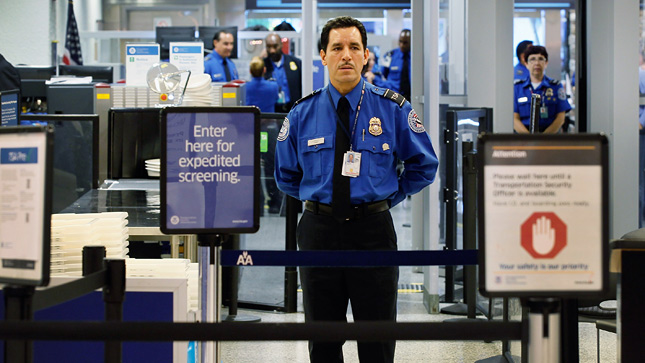
Airlines and their passengers are furious at the Transportation Security Administration for the horribly long lines travelers are experiencing at airport security screening checkpoints. Things may be bad now, but TSA is warning passengers things are going to get even worse during “a rough summer.”
Over the weekend, approximately 450 American Airlines customers missed flights at Chicago’s O’Hare International Airport due long security lines. This comes after the recent Good Friday and Spring Break travel periods set new records for airport security screening delays. During Spring Break week, American Airlines said 6,800 passengers missed their flights because of security lines — and that’s just one airline’s customers.
{mosads}TSA’s excuse is that it has far fewer screeners than it used to but more people are flying today. And TSA is right — its screener workforce has declined by 12 percent, from 47,630 in 2011 to 41,928 in 2016, while passenger numbers increased by over 11 percent during that same period.
TSA reduced its workforce, in part, because it expected more travelers to sign up for much-faster PreCheck lanes, which allow “trusted travelers” who have undergone background checks to go through an abbreviated security check. However, the agency is to blame for repeatedly delaying its long-planned contracts with the third-party companies that will be conducting large-scale recruiting efforts for the PreCheck program. When these contracts finally begin later this summer or fall, it will be too late to enroll enough passengers to reduce this summer’s long security lines.
Similarly, Congress’s recent stop-gap — agreeing to shift $34 million to help TSA hire and train 768 new officers and to pay overtime for current screeners — is just a drop in the bucket and won’t make a major impact on the long delays this summer.
TSA needs to find better ways to match its screener numbers with projected passenger numbers at airports.
One possible fix is for large airports to opt out of TSA-provided screening, as about two dozen mostly smaller airports have done. These airports hire private security companies, overseen by TSA, to provide screening services. The largest airport to opt-out thus far—San Francisco International—has not had serious screening delays this year. In contrast, nearby San Jose International, which uses TSA screeners, has been plagued by long security waits. TSA-certified private screening companies are much better than TSA at matching their screener staffing numbers to peak passenger flows, partly by making greater use of part-timers to handle busy flying periods.
The general manager of Hartsfield Jackson Atlanta International, one of the nation’s busiest airports, told TSA in February that he would soon apply to the opt-out program if passenger screening times and screener performance did not improve significantly. And in late March the agency that operates the Minneapolis-St. Paul airport announced that it would actively looking into joining the opt-out program. This option has is being discussed by other airport managers as well, but they tend to be extremely cautious about the subject since the TSA is also their aviation security regulator.
While the op-out program, known as the Screening Partnership Program, has a good track record, the process of applying to TSA and then having it assess and, hopefully, approve the request to use a private screening contractor takes about a year. So if an airport applied this month, it would not have a more-efficient screening provider in place until next spring at the earliest. So, while it’s a good long-term solution, it won’t help avert this summer’s screening chaos.
That leaves just one alternative that could be implemented in time for this summer’s busy travel periods. The proposal comes from Rep. Bennie Thompson (D-Miss.), the ranking member of the House Homeland Security Committee. Last month he urged TSA Administrator Peter Neffenger to re-assign TSA’s Behavior Detection Officers (BDOs) to regular checkpoint screening duties. Those officers, mostly former checkpoint screeners who have received a few extra days of training, are supposed to look for and identify high-risk suspects. Audits by the Government Accountability Office and other outside experts, however, have found zero evidence that BDOs add any meaningful value to airport security or that they have any success spotting terrorists. Since there are several thousand BDOs on the payroll, and most of them already know how to do checkpoint screening, reassigning them now would quickly add several thousand screeners to help alleviate this summer’s dire shortage.
Longer term, however, the U.S. really needs to re-think how airport screening is provided. At nearly all of the major airports in Europe, providing screening is an airport’s responsibility, not that of the national government. The governments oversee and regulate the process by setting and enforcing standards for screening. Airports can provide screening either with their own security staffs or by contracting with government-approved security companies.
European airports typically have service agreements with airlines that include security screening wait-time standards. The airports and airlines take a far more active role in measuring performance, including screening and wait times, than we see in this country. And as a result, we are unlikely to see U.S.-type security delays at European airports this summer. TSA’s long wait times and screener woes should spur Congress to revisit the underlying, systematic problems plaguing U.S. airport security performance.
Robert W. Poole, Jr., is director of transportation policy at Reason Foundation, where he has advised four presidential administrations on transportation issues.