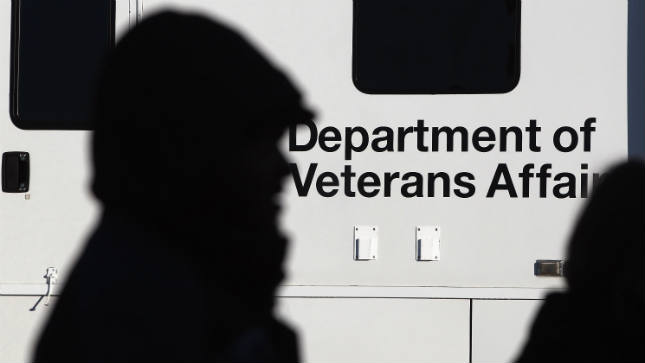
Veterans nationwide continue to struggle with many health and reintegration issues at a time when the two presidential nominees actively campaign across the country, selling their platforms to American voters. Yet, credible and specific plans for how these two office seekers intend to fix the Department of Veterans Affairs (VA) are largely absent from the campaign trail.
{mosads}Nationwide, the VA continues to fall short in adequately caring for vets in several key categories and, in some cases, refuses to fix problems that clearly exist within its workforce. Two years after the veterans community and nation were shocked to learn veterans died on a secret waiting-list in Phoenix while seeking access to healthcare — all because of the actions of a few VA officials — confidence in the system has yet to be restored.
Wait-times to see doctors are still far too long, mental healthcare services are not keeping pace with required demand and the problems at the VA are not fixing themselves.
Republican nominee Donald Trump and Democratic nominee Hillary Clinton have both proposed VA reform plans (which can be found on their campaign websites), but both are weak and vague.
Furthermore, there is no regular, substantive discussion of these proposed reforms on the campaign trail. Both the Clinton and Trump plans have unique shortcomings that are worth pointing out.
Clinton’s plan passively references reforming the VA without any mention of increasing the firing authority that has stymied the current and past VA secretaries from removing incompetent officials. Additionally, there is no proposed action to put the VA union in check, one that has succeeded in blocking congressional legislation in the 114th Congress designed to remove bad employees. This legislation (H.R. 1994, which is supported by major veterans groups and passed the House, but stalled in the Senate) would assist the VA secretary in making sure our veterans don’t experience poor care due to incompetence or malfeasance in the workforce.
Clinton’s plan is more of the same and puts the American Federation of Government Employees (AFGE) union leadership ahead of veterans like me who depend on VA care. Numerous national veteran watchdog and service organizations have supported giving the VA secretary more authority, by way of congressional legislation, to fire bad employees and challenge union chatter about how removing bad employees will affect workforce morale negatively.
These veterans organizations represent millions of veterans, while the VA union represents only thousands of workers (some of whom don’t support its leadership). In order to reform the VA, the next president must put the veteran before the bureaucracy and improve workforce morale by removing the few bad employees from the larger workforce.
Trump’s plan has problems that are even more obvious.
First, his campaign website refers to the “Veterans Administration,” which is an antiquated term for the VA before it was elevated to a Cabinet-level department (up from an agency or administration) back in the late 1980s. If you cannot even define the VA correctly, it is likely the campaign is not hiring veterans on staff to manage messaging and evaluate the VA reform proposals closely.
Veterans have cringed observing this inaccurate reference to an institution upon which they rely. While Trump does call for a firm firing authority for VA officials, something that would help the VA greatly, he also calls for increasing funding for VA care while concurrently calling for increased privatization options.
The Trump plan needs to be clarified because under current law, confusion exists in regard to veteran eligibility for private healthcare, billing problems, case management and regional workforce problems within the VA system. Clarity and consistency is needed, not additional political mixed messages which would transfer these burdens wholly back to Congress, which has clearly failed in recent years to reach consensus on how to solve these issues.
Despite continued demand for VA healthcare services and increased funding provided by Congress annually, reports of healthcare shortfalls and problems are an everyday occurrence. Veterans being denied healthcare at VA facilities or, in other cases, having their cases mismanaged while calling into the VA by phone for assistance, has increased the strain on the men and women that carry the full burden of the nation’s defense.
Far too often, the VA struggles to fulfill its mission. The care the men and women who served require will be needed for decades to come and the next president must reform the VA with an eye toward keeping our national commitment strong into the future. Veterans issues should be a priority and discussed regularly by the presidential hopefuls, not at the bottom of the list on Hillary Clinton’s and Donald Trump’s websites.
Neiweem is an Iraq War veteran, defense and military policy analyst, and executive director of the Neiweem Group, a government affairs firm. He has served as an expert witness in Congress before both House and Senate Committees and regularly appears on radio and television, covering issues that impact the veteran population.
The views expressed by contributors are their own and not the views of The Hill.