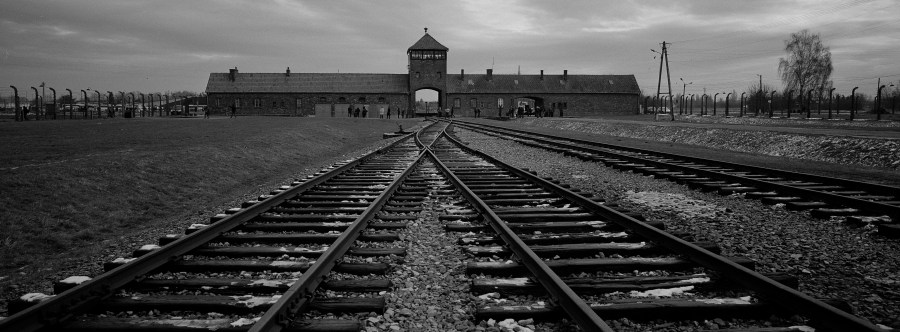
This year marks 80 years since the liberation of Auschwitz, a solemn milestone that demands reflection on humanity’s ability to learn from its darkest moments. When Allied forces uncovered the horrors of the Holocaust in 1945, the world stood at a moral crossroads. It was a moment of clarity, with the global community of nations vowing never to let such atrocities happen again.
Yet, as we examine the state of the world today, a painful question arises: Have we truly learned the lessons?
In the aftermath of World War II, the establishment of the United Nations and the Universal Declaration of Human Rights reflected a global determination to uphold dignity and justice for all. However, the persistence of genocide and human rights violations underscores the gap between ideals and reality. Time and again since 1945, humanity has failed to live up to its promise of “never again,” as atrocities expose the inadequacies of the international systems meant to prevent them.
During the genocides in Rwanda and Darfur and the ethnic cleansing in the Balkans, the world was largely silent. The Assad regime’s use of chemical weapons in Syria was a war crime that blatantly disregarded international norms, yet global responses were negligible. The oppressive regime in Iran continues to suppress its citizens, especially women, while many nations focus on containment at best and pay lip service at worst.
Women in Afghanistan are dehumanized under the Taliban’s rule, denied access to education, work and basic freedoms. Even in recent conflicts, such as Israel’s fight against Hamas, moral clarity has been lost amid politicized narratives, with international institutions such as the International Court of Justice targeting Israel for defending itself against terror.
Disturbingly, Holocaust memory itself has been weaponized for political gain. Russia’s use of the term “denazification” to justify its invasion of Ukraine trivializes the Holocaust and diminishes the struggle against actual manifestations of Nazism and antisemitism. Such cynical manipulation of history not only insults the memory of the victims, it undermines global efforts to confront hatred and bigotry.
As we begin 2025, antisemitism remains a pervasive threat.
Last year saw violent attacks across the globe, from Australia to Europe, the U.S. and Canada. A recent survey by the Combat Antisemitism Movement found that, since the Oct. 7, 2023 attack on Israel, 3.5 million American Jews have personally encountered antisemitism, and 61 percent of American Jews reported feeling less safe.
The ADL recorded a massive spike in antisemitic incidents in the U.S. in the year following the October 7 attacks: more than 10,000 antisemitic incidents between Oct. 7, 2023, and Sept. 24, 2024 — a more than 200 percent increase compared to the same period the previous year. This is the highest number of antisemitic incidents ever recorded by the ADL since they began tracking in 1979.
Canada has experienced a significant surge in antisemitism, marked by a 670 percent increase in incidents compared to the previous year, according to a report issued by J-SOK at the Ministry of Diaspora Affairs and Combating Antisemitism in October 2024. The report states that despite Jewish people comprising only 1.4 percent of Canada’s population, they account for 70 percent of religious hate crimes.
In the United Kingdom, the Jewish charity Community Security Trust reported that the 5,583 incidents recorded across the UK between Oct. 7, 2023, and Sept. 30, 2024, is the highest total for any 12-month period. This figure is three times that of the previous 12-month period, which saw 1,830 incidents recorded.
This resurgence of antisemitism is a stark reminder of how far the world has yet to go. Antisemitism is not an isolated phenomenon — it often signals broader societal intolerance. Combating it requires addressing the underlying structures of hatred and prejudice that endanger all minority groups.

The free world must ask itself how it can turn a blind eye to the atrocities occurring today. In Iran, Syria, Afghanistan and beyond, entire communities endure unchecked oppression, with women in particular facing dehumanizing conditions. As world leaders will convene in Auschwitz to commemorate 80 years to the liberation of the camp, it is time for a sincere and genuine renewed commitment to fighting hatred, antisemitism and racism in all its forms.
The situation of Jews today is the worst it has been since the Holocaust, and the lessons of Auschwitz demand that we act — not just to protect Jewish communities but to uphold the dignity and humanity of all people. Let this milestone be a wake-up call for reflection, accountability and meaningful change.
Shmuel Rosenman, Ph.D., is chair of the International March of the Living.