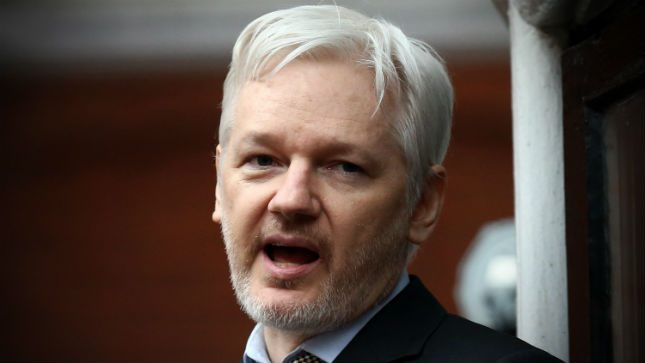
WikiLeaks head Julian Assange over the weekend declared that the “Russian government is not the source” of the Democratic Party emails that have been leaked by his organization.
{mosads}The statement, made during an interview aired by the Russia-funded television network RT, was the first time Assange formally said he did not receive the documents from Vladimir Putin’s regime, contrary to the assertions of American intelligence agencies.
The interview on RT was far from a probing investigation into the recent leaks, mostly offering him a platform to talk about his views on issues that sometimes veered into the fringe, like the “establishment support” of banks and arms manufacturers guaranteeing a win for Democratic presidential nominee Hillary Clinton.
Here are three questions raised by the interview.
Why did Assange violate his policy of not discussing sources?
In the past, Assange had always refused to confirm or deny the source of leaked documents, saying it was against the WikiLeaks policy of complete anonymity.
In July, he told MSNBC’s Chuck Todd, “We don’t give any material away as to who our sources are. It’s a security matter for us as to who our sources are. We have a perfect track record.”
There are many reasons Assange could have violated that policy. The United States has been rattling its sabers at Russia since the attack, with lawmakers in both parties calling for a counterattack, and Russia’s role in election tampering has become a politicized issue.
Violating the long-standing policy will also raise questions if he made the announcement due to his dislike of Clinton.
“I actually feel quite sorry for Hillary Clinton as a person because I see someone who is eaten alive by their ambitions,” he said during the interview.
What does it mean that Assange was willing to violate the policy of total anonymity? Will it hurt the site’s ability to attract more leakers?
Does “the Russian government is not the source” leave wiggle room?
The Russian cybersecurity ecosystem is unique. As investigators sifted through one of the largest computer crime operations in history, the Gameover ZeuS, they found the network of more than a million hijacked computers was also being used for international espionage.
Experts say Russia uses criminal groups in cyber spying operations in exchange for leniency in their less-than-lawful works. Russia could have run the Democratic National Committee (DNC) operation through an above-board military contractor or laundered hacked information through a cut out who does not technically work for the government.
Does Assange actually know who leaked the documents?
Since he began publishing breached emails, Assange has claimed no one besides WikiLeaks has any evidence of who sent the site breached documents.
Supporters have made similar claims. Since many forms of digital evidence can be altered, attributions are difficult to make.
Assange did not say why he is sure the source of the DNC files isn’t the Russian government, leaving open the possibility that he himself is being misled about where the files came from — the same type of trickery he has accused intelligence agencies of falling for.