A Nobel for Greta Thunberg?

Today is Friday. Welcome to Equilibrium, a newsletter that tracks the growing global battle over the future of sustainability. Subscribe here: digital-release.digital-release.thehill.com/newsletter-signup.
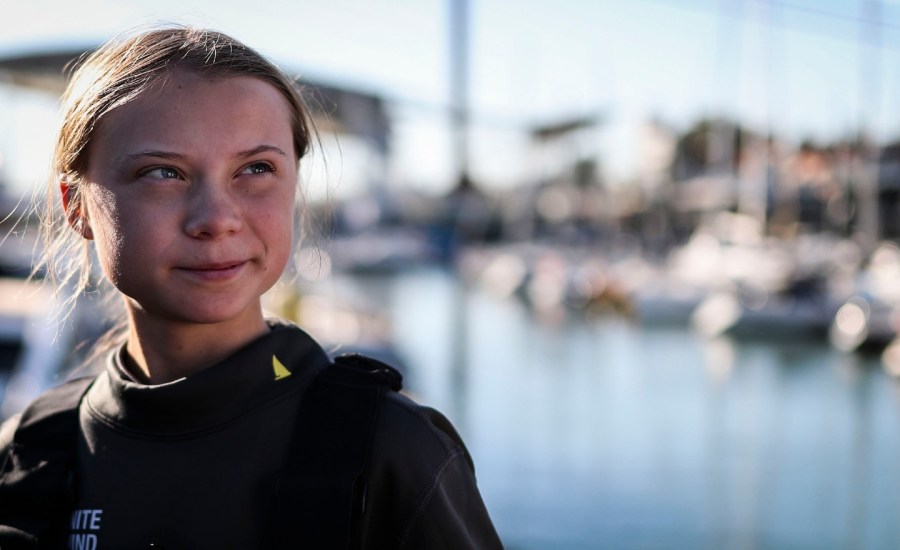
Nobel Peace Prize watchers are favoring a possible winner: climate activist Greta Thunberg, who at 18 would be the second-youngest winner in history.
The prize committee “often wants to send a message,” Dan Smith of the Stockholm International Peace Research Institute told Reuters. And the timing of this message would be particularly fortuitous, as the U.N. Climate Change Conference (COP26) would occur between the announcement and the award ceremony, Smith said.
The focus on Thunberg also comes amid several controversial attempts by international agencies to include the youths who will endure the future impacts of the climate crisis. Such efforts culminated in a youth summit in Milan this week that Thunberg complained was insincere and “cherry picked” and that Italian youth activist Martina Comparelli called “youth-washing,” according to The Associated Press.
Today we’ll focus on two big, long-running controversies: whether the Democrats can come to a deal on reconciliation, and what California is going to do about water.
For Equilibrium, we are Saul Elbein and Sharon Udasin. Please send tips or comments to Saul at selbein@digital-release.digital-release.thehill.com or Sharon at sudasin@digital-release.digital-release.thehill.com. Follow us on Twitter: @saul_elbein and @sharonudasin.
Let’s get to it.
An infrastructure bill, if you can keep it

House Democrats were locked in a complex power struggle Friday over the fate of a related pair of infrastructure bills that have “exposed fierce rifts between moderates and progressives,” The Hill reported.
The Friday scramble comes after Speaker Nancy Pelosi (D-Calif.) twice had to postpone the vote over the first bill — a $1.2 trillion package — as two camps within her party sparred over everything from the scope of the bills, to how much they would cost the country, to the very future of the U.S.’s energy sector.
A tug-of-war-like situation: The debate today is over a bipartisan spending plan that is broadly popular. However, progressives are refusing to support it until they are sure that centrists won’t double-cross them when it comes time to vote for the larger plan.
Which is? A far more sweeping proposal that would spend $3.5 trillion over 10 years on measures that would expand child care, broaden paid family leave and fund community colleges, as well as slow climate change by transforming the power sector.
The bill would “raise taxes on corporations and the wealthy and plow that money back into government health care, education and other programs, touching the lives of countless Americans,” The Associated Press reported.
President Biden himself headed to Capitol Hill to break the deadlock, the AP reported. He faces three sticking points.
A MESSAGE FROM API

The Environmental Partnership recently released its annual report highlighting its new flare management program that reported a 50 percent reduction in flare volumes from 2019 to 2020. Read more.
THE THREE ISSUES

Issue one: Everyone’s got to be on board. To pass any bill through the Senate, Democrats need everyone: That includes centrist Sens. Joe Manchin (D-W.Va.) and Kyrsten Sinema (D-Ariz.), who say they won’t back the larger proposal. The lawmakers have cited concerns about cost and inflation caused by such an infusion of money into the economy, a concern that Manchin said he has in an op-ed for The Wall Street Journal last month.
Progressives and even Biden have argued that there would be minimal cost, according to the AP. Rather, its costs would be offset by, among other things, negotiating a better deal for the government on prescription drugs and raising taxes on those who earn more than $400,000 a year.
Manchin suggested a combined $1.5 trillion package, which progressives panned, with Sen. Bernie Sanders (I-Vt.) saying that $3.5 trillion was “actually a conservative number” given the scale of reforms needed, The Hill reported.
Issue two: Energy. Another specific flashpoint is the $150 billion that progressive Democrats want to put into the Clean Electricity Performance Program (CEPP), which would pay power companies to increase their share of clean energy power generation annually by 4 percent — and would fine them if they fail, according to E&E News.
That would exclude natural gas, unless it can develop as-yet-unproven carbon capture and storage technology that can sufficiently mitigate carbon dioxide emissions.
Manchin, who made his fortune running a coal brokerage, according to The New York Times, has said that natural gas must be included in any clean energy program for it to get his support, according to The Hill.
Issue three: Warring factions outside the walls of Congress. Congressional negotiators have remained civil, but progressives and centrists out in the world view the other as misguided at best and dangerous at worst.
The Wall Street Journal editorial board praised Manchin for an “intervention” aimed at keeping Democrats from “trying to pass a Bernie Sanders agenda on a Joe Biden mandate.”
Meanwhile, climate activist and 350.org founder Bill McKibben accused Manchin of a “brutal ransom note” that was “doing the work of the fossil fuel industry.”
“In other words: it is permissible to spend money on solar panels, windmills and so on, as long as none of it is aimed at actually reducing the amount of oil and gas we pump,” McKibben wrote.
An argument for the portrayal of numbers: Articles citing the $3.5 trillion cost of the larger bill are misleading, Northwestern journalism professor Steven Thrasher argued on Twitter.
Thrasher called it a “catastrophic failure of US journalism and politics” that the $3.5 trillion infrastructure bill amounted to far less annual spending than the $7.5 trillion Pentagon budget — but the latter was always referred to as a $750 billion annual bill.
“$7.5 trillion is the floor for what [war spending] will be over the next decade — and Manchin voted for it,” Thrasher wrote.
Takeaway: With both progressives and the (far less numerous, but strategically positioned) centrists both dug in, the whole package hangs on a knife’s edge.
As a new ‘water year’ begins, Californians brace for further cutbacks

California marked the end of the “water year” by informing its residents on Thursday that if the drought doesn’t ease this winter, officials may have no choice but to enforce statewide mandatory conservation measures, the Los Angeles Times reported.
What’s a water year? Good thing you asked. Happy New Year! The first day of the water year is actually today.
The U.S. Geological Survey defines the “water year” as the 12-month period from Oct. 1 through Sept. 30. Because the water year is designated by the calendar year in which it ends, that means as of today we’re already in water year 2022.
Californians are starting to cut back: Gov. Gavin Newsom (D) had already asked Californians in July to voluntarily decrease water use by 15 percent, but officials are considering implementing mandatory restrictions if things get worse, according to the Times.
Residents had achieved 16-percent water-use reduction since the previous drought, the Times reported, citing California Natural Resources Secretary Wade Crowfoot. Californians reduced water use by 1.8 percent total in July in comparison to the same month in 2020, according to the Times.
But it just may not be enough. “Heading into this winter, we’ll be watching, one, how Californians do on voluntary conservation toward that 15 percent,” Crowfoot said in a phone call with reporters, covered by the Times. “There’s no set sort of trigger date for considering mandatory conservation, but we’ll be watching it closely.”
The whole state is drying up. The drought has hit California hard in the state’s north, south and in between. The city of Ukiah, located about 150 miles northwest of Sacramento, experienced a water year that was its “second driest on record,” surpassed only by 1923-1924, The Ukiah Daily Journal reported, citing the National Weather Service’s Eureka office.
Sonoma County Water Agency, meanwhile, announced earlier this week that it would be offering free water savings kits to water customers in Sonoma and Marin countries. The kits include a bucket to catch water for reuse, a low-flow showerhead, a five-minute shower timer, a low-flow faucet aerator, toilet dye tablets to test for leakages and a self-closing garden hose nozzle.
A DROUGHT ‘FOR THE RECORD BOOKS’
Six months of no rain and counting: The state’s capital, Sacramento, marked the 195th day since rain last fell, breaking a record set in 1880, SFGate reported, citing the National Weather Service.
All but eight of California’s 58 counties remained under a drought emergency as trucks delivered water to communities across Central and Northern California and farmers uprooted their almond orchards and vineyards, according to SFGate.
What’s next? Crowfoot, the natural resources secretary, said the state has been pursuing “customized approaches” to conservation, as well as scaling up California’s Save Our Water campaign to spread awareness, according to the Times.
He also said that California’s newly approved $15 billion budget for addressing climate change includes a $5.1 billion provision for drought response and water projects — describing the funds as “a quantum leap of investment,” the Times reported.
State Water Resources Control Board Chair Joaquin Esquivel added that the Water Board has earmarked $1 billion to bolster water systems, in light of pandemic-era regulations that have prohibited water cutoffs to customers, SFGate reported.
An uncertain future ahead: As Californians look out over the Pacific this fall with hopes of “life-giving precipitation,” they are doing so “with no small amount of worry,” Peter Gleick, co-founder and president emeritus of the Pacific Institute, wrote in an Op-Ed for the Los Angeles Times.
Last words: “The past two years have been bad: years of drought, heat, fire and ecological collapse,” Gleick wrote. “A repeat of the past two years would be catastrophic. Every drought is different, but with climate change upping the ante, the current drought has been one for the record books.”
A MESSAGE FROM API

The Environmental Partnership recently released its annual report highlighting its new flare management program that reported a 50 percent reduction in flare volumes from 2019 to 2020. Read more.
Follow-up Friday
Our weekly tying-off of loose threads from the week.
1 in 8 acres in California has burned in the past decade
- Earlier this week, we looked at how N95 respirator masks might help wearers evade some of the dangers of wildfire smoke.
- Those dangers are only getting worse. About 1 in every 8 acres of California land has been burned by wildfires in the past decade, according to a Bay Area News Group analysis, covered by The Hill.
- The analysis, originally published by The Mercury News, found that since 2012 a total of 12.7 million acres have burned in California — double what had burned in the previous decade.
- “I think this trend is going to continue,” Craig Clements, director of San Jose State University’s Fire Weather Lab, told The Mercury News. “There’s a lot of area that can still burn.”
Wizz Air CEO labels sustainable fuel, offsets as ‘greenwashing’
- Following up on our Travel Tuesday segment, and recent announcements from multiple airlines about sustainable jet fuel use, the CEO of low-cost airline Wizz Air has said that such aviation fuels and carbon offsets are no more than “greenwashing,” Bloomberg Green reported.
- “There is no SAF [sustainable aviation fuel] in the world that is going to achieve that,” Jozsef Varadi said at an industry event, according to Bloomberg Green. “So, in my mind, SAF and carbon offsets are more greenwashing than real at this point.”
- Better alternatives, Varadi argued, are operational changes that improve route efficiency and the use of advanced aircraft crammed with passengers.
New electric motor for a new luxury electric SUV
- We reported Monday about the challenge of developing high-performance electric motors for the luxury car market.
- BMW is rolling out the iX, an electric SUV powered by its own proprietary motor that avoids the need for rare-earth metals by skipping permanent magnets entirely, The Wall Street Journal reported.
- Instead, it uses twin motors powered by electromagnets: conventional metals magnetized by the presence of electricity.
- The two motors combined power of 516 horsepower “can lift the iX to 60 mph in 4.4 seconds and to a top speed of 124 mph alarmingly soon after that,” the Journal reported.
Please visit The Hill’s sustainability section online for the web version of this newsletter and more stories. Have a great weekend; we’ll see you on Monday.