On The Money: Producer prices rose record 7.8 percent annually in July | Jobless claims fall by 12,000 to 375K



Happy Thursday and welcome back to On The Money, where we’re following news about a controversial 2008 conservatorship ending. I’m Sylvan Lane, and here’s your nightly guide to everything affecting your bills, bank account and bottom line.
See something I missed? Let me know at slane@digital-release.digital-release.thehill.com or tweet me @SylvanLane. And if you like your newsletter, you can subscribe to it here: http://bit.ly/1NxxW2N.
Write us with tips, suggestions and news: slane@digital-release.digital-release.thehill.com and njagoda@digital-release.digital-release.thehill.com. Follow us on Twitter: @SylvanLane and @NJagoda.
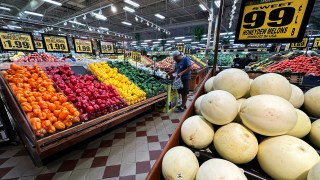
THE BIG DEAL—Producer prices rose record 7.8 percent annually in July: Producer prices rose a seasonally adjusted 1 percent in July and record-breaking 7.8 percent over the past 12 months on an unadjusted basis, according to data released Thursday by the Labor Department.
- The producer price index (PPI) for final demand, which measures changes in prices charged by domestic producers to suppliers and retailers, rose at the fastest annual pace since the federal government began calculating year-over-year PPI changes in November 2010, the Labor Department said.
- The PPI without food, energy and trade services rose 6.1 percent on an unadjusted basis over the past 12 months, the highest level recorded since the series began in August 2014.
- Prices for final demand services also notched a record-breaking monthly increase in July, rising 1.1 percent for the first time since the Labor Department started calculating the metric in December 2009.
The background: Economists expected the PPI to rise sharply again in July after jumping 7.3 percent in the year since June. Even so, the pace of July’s producer price gains well exceeded analysts expectations of another 7.3 percent annual jump with a 0.6 percent monthly increase.
LEADING THE DAY
Jobless claims fall by 12,000 to 375K: New applications for jobless benefits fell during the first week of August by 12,000 to a total of 375,000, according to data released Thursday by the Labor Department.
- In the week ending Aug. 7, initial claims for unemployment insurance fell from the previous week’s revised total of 387,000. The four-week average of claims ticked higher by 1,750 to 396,250 after an unusually high jump in mid-July.
- Another 104,572 Americans applied for Pandemic Unemployment Assistance (PUA), an increase of 10,145 from the last week of July, driven primarily by a 4,100-claim increase in California and a 6,000-claim increase in Michigan.
- Several states have reported sharp one-time increases or decreases in claims throughout the pandemic, largely due to filing and processing issues or fraud.
Jobless claims have steadily declined through August as hiring accelerated through the summer. Roughly half of U.S. states have also pulled out of expanded federal unemployment aid set to expire in September. I’ve got more on the future of the program here.
Housing unit growth fell in half in wake of Great Recession: census: The total number of U.S. housing units grew 6.7 percent between 2010 and 2020, according to Census Bureau data released Thursday, falling sharply after the Great Recession.
Housing unit growth fell by roughly half in the 2010s from its level during the first decade of the new millennium, according to the 2020 census, after the collapse of a housing bubble in 2007 kicked off what became the Great Financial Crisis.
The housing boom of the mid-2000s contributed to a rapid expansion of supply, while the housing crash and ensuing Great Recession of 2007-2008 resulted in an increase in the number of vacant units,” wrote Evan Brassell, chief of housing statistics for the Census Bureau, in a Thursday post breaking down the data. “Those issues, and the recovery that lasted well into the next decade, potentially reduced demand for new construction,” he added.
I’ve got more on which states and cities saw the biggest bumps—and which got left behind—right here.
GOOD TO KNOW
- Congressional aid for disadvantaged farmers that was authorized earlier this year as part of President Biden’s $1.9 trillion coronavirus relief law is being challenged in the courts by white farmers, preventing roughly $5 billion from reaching Black farmers who are in desperate need of financial assistance.
- Soccer star Lionel Messi’s “welcome package” to his new club included millions of euros in cryptocurrency.
- Facebook joined several major companies Thursday in pushing back its full return to office date amid a surge of coronavirus cases driven by the delta variant.
- Business groups, which celebrated the bipartisan $1 trillion infrastructure bill passed by the Senate on Tuesday, are preparing to aggressively lobby against Democrats’ broader $3.5 trillion spending package even as House leaders say they will not pass one bill without the other.
Copyright 2023 Nexstar Media Inc. All rights reserved. This material may not be published, broadcast, rewritten, or redistributed.
More Business & Economy News





Log Reg


